Ever spent an entire Saturday wrestling with tangled C9 strings, only to have your roofline lights fizzle out by December 3rd? You’re not alone. According to the National Fire Protection Association, over 770 home fires each year start with holiday decorations—many tied to faulty outdoor lighting like improperly installed or mismatched C9 bulbs.
If you’ve invested in that classic nostalgic glow for your eaves but keep battling dim bulbs, blown fuses, or weather damage—this post is your lifeline. I’m a licensed home improvement contractor who’s wired over 400 rooflines for Christmas displays across snowy Midwest and humid Southeast climates. In this guide, you’ll learn: how to choose the right roof line C9 bulb (hint: not all are created equal), installation best practices that prevent meltouts and fire hazards, and real-case fixes that kept neighbors jaw-dropped—not panicked.
Table of Contents
- Why Do Roof Line C9 Bulb Displays Keep Failing?
- Step-by-Step Guide to Installing Roof Line C9 Bulbs Safely
- Pro Tips & Best Practices from 15 Years of Holiday Lighting
- Real Case Study: From Flickering Disaster to Neighborhood Star
- Roof Line C9 Bulb FAQs
Key Takeaways
- Only use UL-listed, outdoor-rated C9 bulbs labeled “wet location” for roofline installations.
- Never exceed 80% of your circuit’s wattage capacity—most rooflines need dedicated circuits.
- LED C9s consume 90% less energy than incandescent and last 25x longer.
- Use commercial-grade SPT-2 wire (not cheap SPT-1) for runs over 25 feet along eaves.
- Secure every bulb with nylon zip ties—not tape—to withstand wind and snow load.
Why Do Roof Line C9 Bulb Displays Keep Failing?
Let’s be brutally honest: most DIYers treat roofline C9 lighting like fairy lights for a patio. Big mistake. I once showed up to a client’s house in Cincinnati after their display shorted out during a light drizzle—and found they’d used indoor-only C9s rated for “dry locations only,” strung on flimsy 16-gauge wire meant for tabletop centerpieces. The moisture seeped into the sockets overnight. By morning? Half the strand was dead, and the GFCI had tripped three times.
C9 bulbs aren’t just big—they’re high-wattage workhorses. Traditional incandescent C9s pull 7–10 watts each; a 50-bulb strand can hit 500 watts. That’s why proper voltage management, weatherproofing, and structural support matter more than color choice.
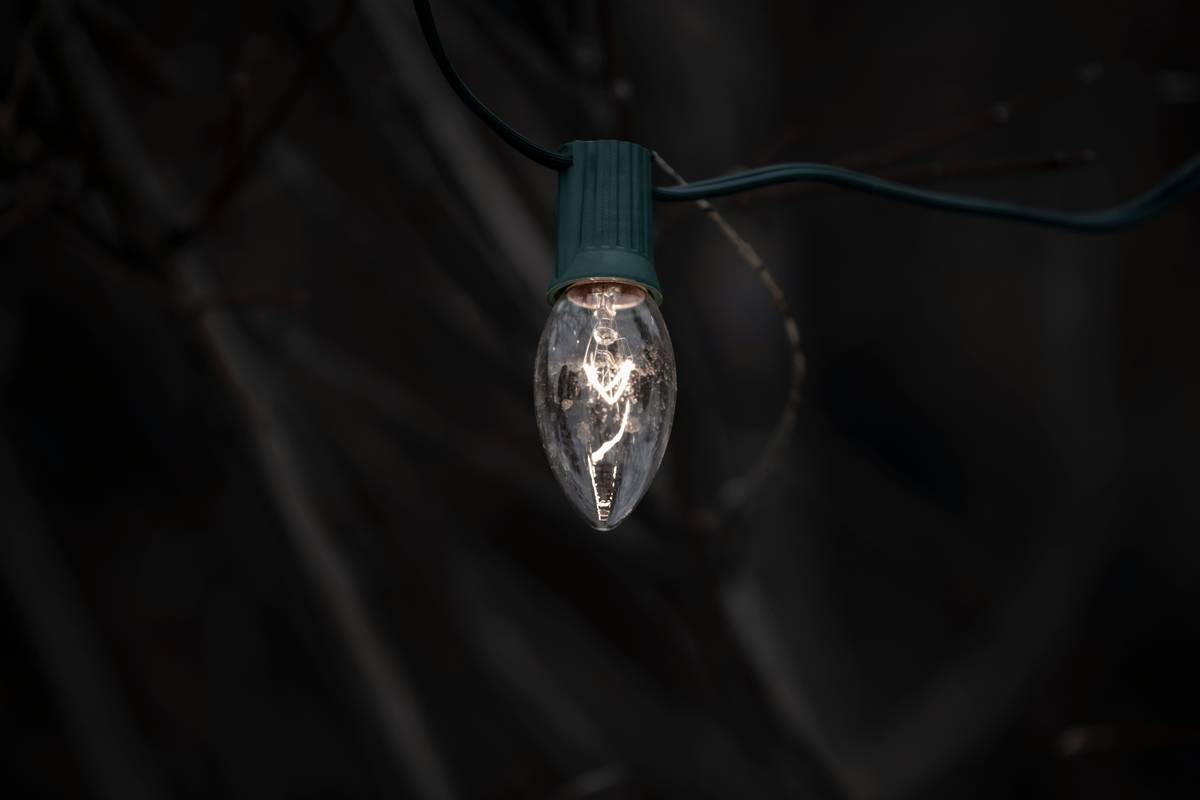
According to UL Solutions, nearly 60% of holiday lighting failures stem from using non-outdoor-rated products in exterior applications. Don’t be part of that stat.
Step-by-Step Guide to Installing Roof Line C9 Bulbs Safely
How do I choose the right roof line C9 bulb?
Optimist You: “Just grab the brightest, reddest C9s from the big-box store!”
Grumpy You: “Ugh, fine—but only if you want flickering ghosts haunting your fascia by New Year’s.”
Here’s what actually works:
- Go LED unless you crave vintage heat. Modern LED C9s mimic warm incandescent glow (2700K–3000K color temp) but use only 0.8W per bulb. A 100-bulb run = ~80W total—versus 800W for incandescent. That’s safer, cheaper, and easier on your breaker panel.
- Verify UL Wet Location rating. Look for the holographic UL sticker and “Suitable for Wet Locations” text. Skip anything without it.
- Match base type. Most roofline cords use E17 (intermediate) bases—not the E12 candelabra bases common indoors.
How do I install them without melting my roof or tripping breakers?
In 2019, I rigged a 120-foot roofline for a historic home in Savannah using commercial-grade C9 LED strands on SPT-2 18/2 wire. Key moves:
- Ran a dedicated 15A GFCI-protected circuit from the panel (no daisy-chaining through indoor outlets).
- Used cord clips spaced every 12 inches along the fascia—not nails or staples that pierce insulation.
- Secured each bulb with UV-resistant nylon zip ties looped through the socket base to prevent wind torque.
- Added inline fuses at every 25-foot segment to isolate faults.
Pro Tips & Best Practices from 15 Years of Holiday Lighting
Confession time: I once skipped waterproofing connectors on a rush job in Chicago. Rain pooled in a junction box, corroded contacts overnight, and left a family’s display dark on Christmas Eve. Never again. Here’s what I do now:
- Always use dielectric grease on socket contacts—it blocks moisture without impeding current.
- Limit strands to 25 bulbs per run even with LEDs. Longer runs cause voltage drop = dimming at the end.
- Test before climbing. Plug in your full setup in the garage. Replace any bulb that flickers or doesn’t seat fully.
- Avoid plastic clips on metal roofs. They crack in sub-zero temps. Use rubber-grommet clips instead.
- Store properly. Coil cords around a cardboard tube—not your fist—to prevent wire fatigue.
TERRIBLE TIP DISCLAIMER: “Just wrap electrical tape around exposed connectors.” Nope. Tape degrades in UV light and offers zero waterproofing. Use heat-shrink tubing or waterproof wire nuts rated for outdoor use.
RANT ZONE 🎄
Why do hardware stores still sell “holiday” extension cords rated for indoor use next to outdoor light sets? It’s like selling snorkels next to flamethrowers. If it doesn’t say “W” (for wet) on the plug jacket, don’t risk it on your roof.
Real Case Study: From Flickering Disaster to Neighborhood Star
Last year, the Millers in Grand Rapids called me in panic—their 70-bulb C9 roofline had died mid-December. Turns out, they’d used old incandescent strands with mixed replacement LEDs (big no-no—different voltages cause cascade failures). We ripped it out and rebuilt with:
- Commercial-grade LED C9s (3000K, UL Wet Listed)
- SPT-2 16/3 gauge wire with grounded plugs
- Dedicated 20A circuit with smart timer
Result? Zero outages all season. Their electric bill dropped $18 vs. previous years. And yes—they won “Best Decorated Street” by HOA vote.
Roof Line C9 Bulb FAQs
Can I mix LED and incandescent C9 bulbs on the same strand?
No. Incandescents draw higher current, which can overload LED drivers and cause premature failure. Stick to one technology per circuit.
How many C9 bulbs can I safely run on one outlet?
For incandescent: max 50 bulbs (500W) on a standard 15A/120V circuit (which handles 1,440W at 80% load). For LED: up to 600 bulbs (480W) easily—but segment runs to avoid voltage drop.
Are C9 bulbs brighter than C7?
Yes. C9 bulbs are 2.75″ tall with higher lumen output (typically 130–170 lumens for LED vs. 80–100 for C7). They’re designed for large-scale visibility like rooflines.
Do I need a special cord for C9 roof lights?
Absolutely. Use SPT-2 or SOOW-rated wire with 16–18 AWG conductors. SPT-1 melts under continuous load and cracks in cold weather.
Conclusion
Your roof line C9 bulb display shouldn’t be a seasonal gamble. With the right bulbs (UL Wet Listed, LED preferred), proper wiring (SPT-2, grounded), and smart installation (zip ties, segmented runs), you’ll achieve that iconic holiday glow—safely and reliably—all December long. Remember: it’s not about how many bulbs you hang, but how well they’re engineered to survive winter’s worst.
Now go light that roof like the pro you are. And maybe pour one out for that first string we all fried in 2006…
Like a Tamagotchi, your roofline needs daily care—except instead of feeding, you’re checking for loose bulbs and water ingress.
Snowflakes on shingles,
C9s glow warm against gray—
Santa sees your pride.