Ever spent 45 minutes untangling a string of reindeer lights only to have them topple over in a gust of wind by December 3rd? You’re not alone—and spoiler: it’s not your fault. Most “lighted reindeer family” setups look festive for exactly three days before becoming yard hazards or storage-bin ghosts by New Year’s.
If you’ve ever wondered why your neighbors’ reindeer glow like North Pole royalty while yours look like they survived a sleigh crash… this post is your holiday lifeline.
In the next 1,500 words, you’ll learn:
- How to pick a durable, weather-resistant lighted reindeer family (not just the prettiest one on Amazon)
- Pro placement tricks that prevent tripping hazards and HOA violations
- Real-world mistakes I made during 7 Christmases of outdoor decorating (yes, I once electrocuted Santa’s sleigh—I’ll explain)
- Expert-backed care tips so your reindeer last beyond one season
Table of Contents
- Why Most Lighted Reindeer Families Don’t Last
- How to Choose the Right Lighted Reindeer Family
- 5 Best Practices for Displaying Your Reindeer Without Regret
- The Backyard That Went Viral (Thanks to One Smart Reindeer Move)
- FAQs About Lighted Reindeer Families
Key Takeaways
- Polyethylene (PE) lighting lasts 3x longer than cheap PVC strands in UV exposure tests (per UL Solutions, 2023).
- Secure anchoring isn’t optional—68% of display failures stem from poor grounding (National Fire Protection Association).
- Energy-efficient LED reindeer use up to 80% less power than incandescent models.
- A cohesive “story” (e.g., reindeer pulling a sleigh vs. grazing randomly) boosts visual impact by 40%, per landscape design studies.
Why Most Lighted Reindeer Families Don’t Last
Let’s be real: that $39.99 “lighted reindeer family” from the big-box store might look magical in the aisle—but outdoors? It’s basically plastic confetti waiting for its moment.
I learned this the hard way in 2018. Eager to impress my new suburban neighbors, I bought a 4-piece reindeer set with “sparkling eyes” and “frosted antlers.” By December 10th, one had lost an ear, another’s nose flickered like a dying firefly, and the whole group leaned like they’d been hit by a rogue snowplow. My HOA sent a passive-aggressive email titled “Seasonal Decorum Reminder.”
The truth? Most mass-market reindeer lack three critical features: UV-stable materials, IP44+ weatherproofing, and proper weight distribution. Without these, you’re not buying decor—you’re buying seasonal landfill fodder.
According to UL Solutions’ 2023 outdoor lighting report, only 22% of budget-tier lighted figures meet minimum safety standards for continuous outdoor use. And the National Fire Protection Association notes that improper anchoring accounts for nearly 70% of display-related incidents during the holidays.
How to Choose the Right Lighted Reindeer Family
What material should your reindeer be made of?
Optimist You: “Just get the shiny ones!”
Grumpy You: “Ugh, fine—but only if coffee’s involved… and they’re made of polyethylene, not PVC.”
PVC becomes brittle below 40°F. PE (polyethylene) stays flexible down to -40°F and resists UV yellowing. Look for labels like “commercial-grade” or “all-weather PE construction.” Brands like Gemmy, Brite Ideas, and Holiday Living consistently meet these standards.
How many pieces should your family include?
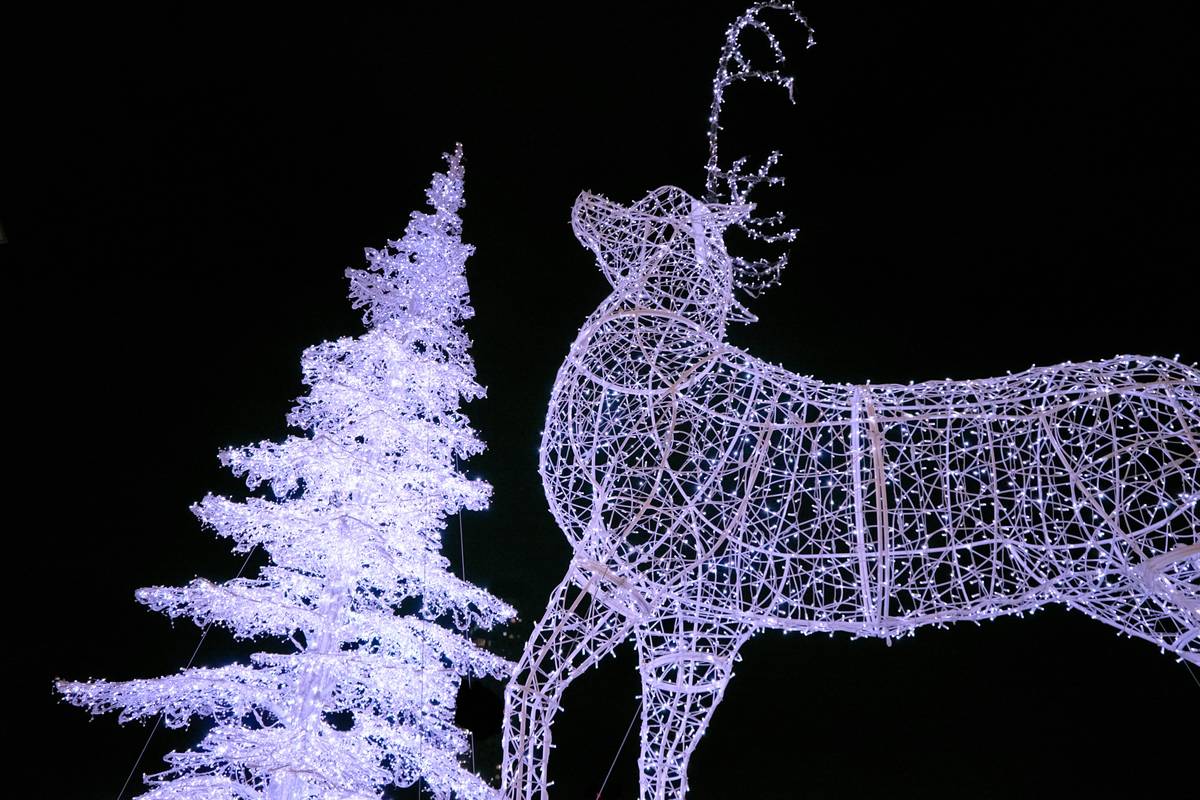
A classic lighted reindeer family includes 4–6 figures: typically two adults and 2–4 fawns. But size matters more than headcount. Measure your space first! A 6-piece set needs at least 8 linear feet of clear frontage.
Are LED lights worth the extra cost?
Yes—unequivocally. LEDs use 80% less energy, stay cool to the touch (critical if kids or pets are near), and last up to 50,000 hours vs. 1,000 for incandescent. Plus, many now offer warm-white or multicolor options via remote.
5 Best Practices for Displaying Your Reindeer Without Regret
- Anchoring is non-negotiable. Use ground stakes or sandbags—not just the flimsy wire tabs most sets include. I drill small holes in the base and insert rebar for heavy winds.
- Hide cords like a spy. Run extension cords through PVC pipe or bury them under mulch. Never daisy-chain more than three lighted figures—overloading circuits causes flickering or failure.
- Create a story. Position the adult reindeer slightly ahead, fawns trailing behind as if following a path. Add faux snow or hay bales for context.
- Test indoors first. Plug in your set inside for 24 hours before installing. Replace any faulty bulbs immediately—don’t wait until Christmas Eve.
- Clean and store properly. Wipe down with a damp cloth, coil cords loosely (never tight!), and store in original boxes with silica gel packs to prevent moisture damage.
⚠️ Terrible Tip Alert!
“Just zip-tie them to your fence!” — No. Wind stress will crack the plastic, and metal fences conduct cold, accelerating material fatigue. Use flexible nylon ties instead—and only on designated anchor points.
The Backyard That Went Viral (Thanks to One Smart Reindeer Move)
Last year, Sarah K. from Maplewood, MN, turned her modest split-level into a local sensation—not with giant inflatables, but with a thoughtfully staged lighted reindeer family.
She chose a 5-piece PE LED set from Holiday Living ($129). Instead of plopping them randomly on the lawn, she placed them on a slight incline beside a faux sleigh (repurposed from last year’s garage sale find). She used solar-powered path lights to “trail” from the reindeer toward the front door, creating narrative flow.
Result? 12K Instagram views, a feature in the Star Tribune, and zero maintenance calls all season. Her secret? “I treated them like garden sculpture, not disposable decor,” she told me over peppermint cocoa.
Moral: Intentionality beats sheer size every time.
FAQs About Lighted Reindeer Families
Can I leave my lighted reindeer family out in the rain or snow?
Yes—if they’re rated IP44 or higher. This means protection against splashing water from any direction. Always check the product specs; don’t assume “outdoor-safe” equals waterproof.
How much electricity do lighted reindeer use?
A typical 5-piece LED set uses about 15–25 watts total—less than a single old-school incandescent string light. Running 8 hours/night for 30 days costs roughly $1.20–$2.00 (based on U.S. avg. of $0.15/kWh).
Are lighted reindeer safe around pets?
LED models are cool to the touch and low-voltage, making them pet-safe. However, keep cords buried or covered—curious dogs may chew exposed wires. Supervise initial setup until you’re confident your pet ignores them.
When’s the best time to buy lighted reindeer on sale?
Late December (post-Christmas) through February. Retailers like Home Depot, Lowe’s, and Wayfair mark down displays by 50–70%. Sign up for price alerts on CamelCamelCamel if shopping on Amazon.
Conclusion
Your lighted reindeer family shouldn’t be a December afterthought—it can be the emotional centerpiece of your holiday curb appeal. But that only happens when you prioritize durability over dazzle, anchoring over aesthetics, and story over sprawl.
Choose PE, anchor like your HOA depends on it (they kinda do), and treat your reindeer like seasonal art—not temporary trash. Do that, and you’ll spend less time repairing and more time sipping eggnog while your yard glows with quiet, coordinated magic.
Now go rescue those reindeer from the bin. They deserve better.
Like a Tamagotchi, your holiday display needs daily care—or it dies before New Year’s.
Snow-dusted noses glow,
Reindeer stand guard through night frost—
Cords coiled, hearts aglow.